A Joint Initiative by Association for Collective Opportunity (ACO) and Foundation for the Alleviation of Poverty and Sustainable Living (FOTAPS)
Date: April 20, 2026 | Location: FOTAPS Training Centre, Bwitingi, Buea, Cameroon | Participants: 18 Women
| 18 Women Trained | 4 Products Made | 1 Day Training Duration | 2 Partner Organizations |
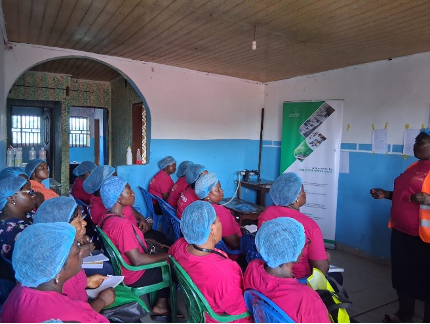
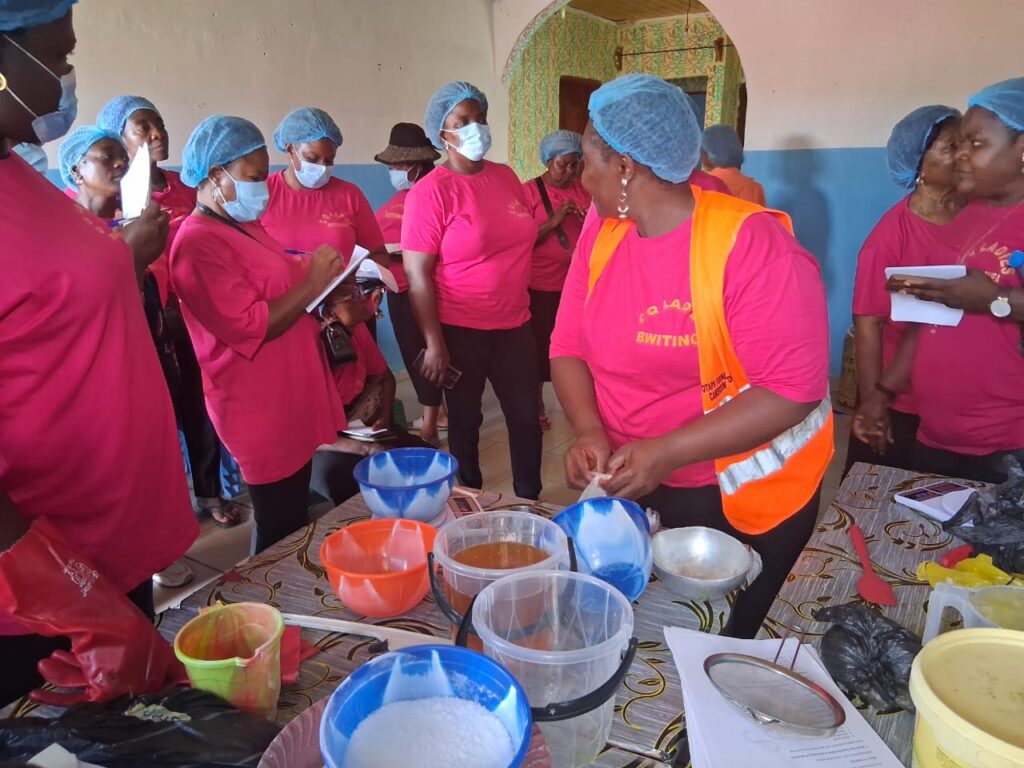
This report documents the community skills training program conducted on April 20, 2026 by ACO and FOTAPS at the FOTAPS Training Centre in Bwitingi, Buea, Cameroon. Eighteen women from the CEAC Bwitingi Women’s Group received practical, hands-on training in the production of solid soap, liquid soap, bleaching agents, and vinegar — essential household products that can be manufactured at low cost for domestic use and local income generation. The initiative represents a significant milestone in grassroots economic empowerment, hygiene promotion, and sustainable livelihood development for women in Cameroon’s South West Region.
On April 18, 2026, the Association for Collective Opportunity (ACO) and the Foundation for the Alleviation of Poverty and Sustainable Living (FOTAPS) formalized a co-sponsorship and training agreement to empower women in the Bwitingi community, Buea, Cameroon. Both organizations share a mission of community development through skills acquisition, sustainable income generation, and improved quality of life.
On April 20, 2026, the training was successfully conducted at the FOTAPS Training Centre with 18 active participants drawn from the CEAC Bwitingi Women’s Group. The program focused on the production of four key household products: solid soap, liquid soap, bleaching agents, and vinegar — items with high daily demand and strong potential for micro-enterprise development in local Cameroonian markets.
This initiative addresses critical community needs including women’s economic empowerment, household hygiene improvement, and entrepreneurship development — aligning with broader Sustainable Development Goals (SDGs), particularly SDG 1 (No Poverty), SDG 3 (Good Health and Well-being), and SDG 5 (Gender Equality).
Training Objectives
The training program was designed around four strategic objectives to maximize impact for the Bwitingi women’s community:
- Build Capacity in Household Product Manufacturing: Equip CEAC Bwitingi women with practical, replicable skills in the small-scale production of soap and related cleaning products, enabling self-sufficient and cost-effective household management.
- Promote Community Hygiene and Sanitation: Increase access to affordable, locally produced hygiene products to improve sanitation standards and public health outcomes within the Bwitingi community and surrounding areas.
- Foster Entrepreneurship and Economic Self-Reliance: Encourage women to leverage newly acquired production skills to establish micro-enterprises, generate income, and achieve greater financial independence through local market participation.
- Strengthen Community Partnerships and Collaboration: Deepen the working relationship between CEAC Bwitingi women’s groups and supporting organizations (ACO and FOTAPS) to build a sustainable ecosystem of community support and resource sharing.
Training Methodology
The training commenced at 3:30 PM and employed a multi-method participatory approach to ensure knowledge retention and practical skill development. The session opened with welcome remarks from the training facilitators and the President of the CEAC Women’s Group, establishing a collaborative and motivating learning environment.
Key Training Methodologies Employed:
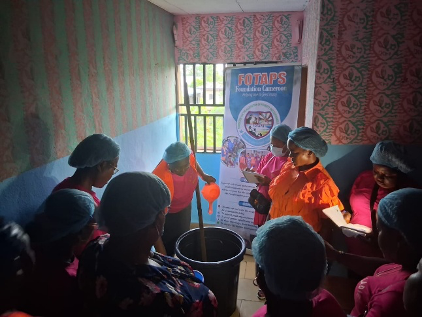
- Hands-On Product Demonstrations: Expert facilitators led live demonstrations of each production process — solid soap, liquid soap, bleaching agents, and vinegar — allowing participants to observe best practices, ingredient ratios, and safety protocols in real time.
- Group Practice Sessions: Participants worked in collaborative groups to produce small batches of each product, reinforcing learning through direct application and peer-to-peer knowledge exchange.
- Interactive Discussions on Market Opportunities: Structured discussions explored real-world challenges, local market dynamics, product pricing strategies, and viable marketing channels to prepare participants for entrepreneurial ventures.
- Chemical Safety and Equipment Training: Dedicated safety sessions ensured all participants understood proper handling procedures for chemical inputs, protective equipment usage, and safe storage — minimizing risks in home or community production settings.
Products Covered in Training
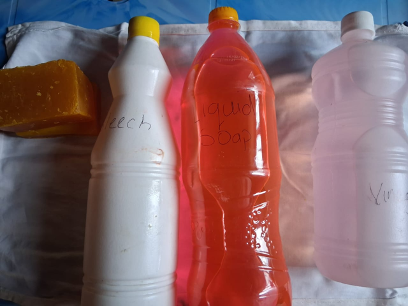
Participants received comprehensive training in the production of four high-demand household products:
| Product | Primary Use | Income Potential |
| Solid Soap (Savon) | Personal hygiene, laundry, household cleaning | High — low cost to produce, widely purchased locally |
| Liquid Soap | Handwashing, dishwashing, surface cleaning | High — versatile product with broad market appeal |
| Bleaching Agents | Disinfection, laundry whitening, sanitation | Medium-High — essential for hygiene-conscious households |
| Vinegar | Food preservation, cleaning, natural disinfectant | Medium — growing demand for natural cleaning alternatives |
Training Outcomes and Achievements
The training yielded measurable results that demonstrate the program’s effectiveness in building practical capacity among Bwitingi women:
- Full Participant Engagement: All 18 registered women actively participated throughout the entire training session, successfully producing samples of all four household products — demonstrating high levels of motivation and engagement.
- Skills Acquisition and Confidence: Four (4) participants expressed strong confidence in independently replicating all production processes, signaling readiness for immediate product commercialization. The majority of participants will benefit from additional follow-up mentoring to reinforce and deepen their skills.
- Strengthened Community Cohesion: The collaborative nature of the training fostered stronger interpersonal bonds and teamwork among the Bwitingi women’s group, laying a solid foundation for future cooperative production ventures.
Challenges Identified
While the training achieved its primary objectives, several challenges were identified that could limit the long-term sustainability and scalability of this initiative:
- Limited Organizational Funding: Both ACO and FOTAPS face financial constraints that restrict their capacity to deliver sustained follow-up mentoring, monitoring visits, and resource mobilization support for participants post-training.
- Insufficient Production Equipment: The absence of essential small-scale manufacturing equipment — including reagent mixers, production vessels, and professional packaging supplies — limits participants’ ability to scale up production capacity and meet market demand effectively.
Recommendations
Based on the training outcomes and challenges identified, the following strategic recommendations are proposed to maximize impact and ensure program sustainability:
- Establish a Cooperative Production Unit: Create a dedicated women’s cooperative production hub in Bwitingi where trained participants can conduct hands-on skills transfer to other community groups, centralizing resources and expanding program reach sustainably.
- Prioritize Solid Soap (Savon) as an Entry-Level Product: Encourage Bwitingi women to begin with solid soap production as a low-risk, high-return starting point. Revenue generated can be reinvested to diversify production and support broader livelihood goals.
- Develop Strategic Marketing Partnerships: Actively seek partnerships with local retailers, community marketplaces, schools, healthcare facilities, and NGOs to establish reliable distribution and marketing channels for produced goods.
- Organize Refresher and Advanced Training Modules: Schedule periodic refresher sessions to reinforce skills and introduce advanced modules covering product diversification, quality control, branding, packaging design, and basic business management.
Conclusion
The Bwitingi Women’s Group Household Products Training Program represents a transformative step toward sustainable community empowerment in Buea, Cameroon. Through a carefully structured, participatory training approach, ACO and FOTAPS successfully equipped 18 women with practical, market-ready skills in soap and household cleaning product manufacturing.
The initiative demonstrates how targeted skills development programs can simultaneously address multiple community needs — improving household hygiene and sanitation, reducing living costs through local production, and creating viable income-generation pathways for women. The Bwitingi women’s group is now positioned to become a productive force in their community’s economic landscape.
Continued and enhanced support from ACO and FOTAPS — through follow-up mentoring, equipment provision, and market linkage facilitation — will be crucial in translating these newly acquired skills into lasting economic opportunities. This training is not merely an end in itself, but a critical foundation for a self-sustaining community enterprise movement centered on Cameroonian women’s ingenuity and resilience.
Authorized Signatures
| Association for Collective Opportunity (ACO) Signature: _________________________ Name: _____________________________ Date: ______________________________ | Foundation for the Alleviation of Poverty and Sustainable Living (FOTAPS) Signature: _________________________ Name: _____________________________ Date: ______________________________ |
Report prepared by ACO & FOTAPS | April 2026 | Bwitingi, Buea, Cameroon
